

The erodibility of trisoplast and clay
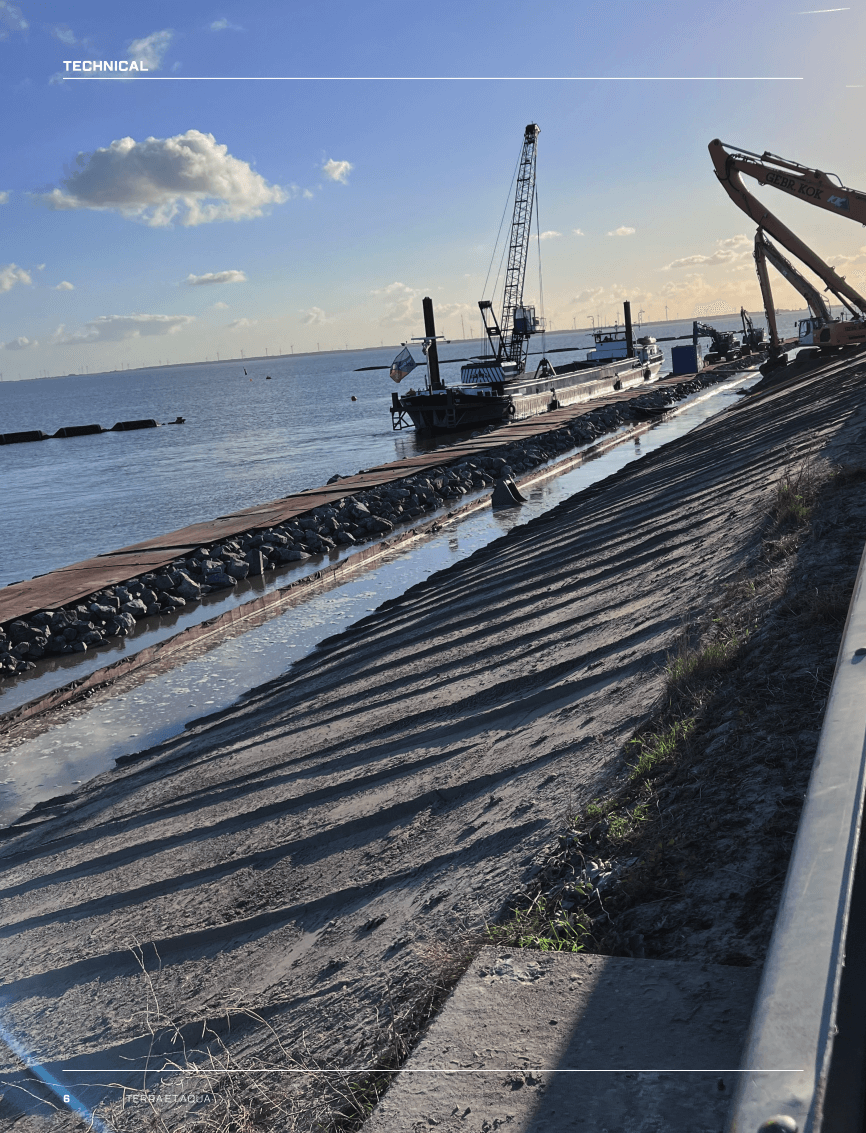
The Netherlands has almost 4,000 km of dykes. Over the past decades, a significant amount of clay has been used within these dykes for reinforcement. This layer of clay is essential as water barrier and to prevent the construction from collapsing due to erosion. Clay of the right quality is becoming less and less available, particularly because the usage requires a minimum thickness of 1.0 to 2.0 metres. Therefore, alternative materials such as Trisoplast are being researched as a suitable replacement for clay.

Experimental study on the adhesion factor of clay
A major mechanical property of clay is the adhesion factor that reflects the ratio between its cohesive and adhesive strength under different water content.

Stiff Clays
Stiff clays or silts can be dredged by backhoe, trailing suction hopper or cutter suction dredgers which will influence the properties of the material.

Soft Clays
Soft clays or soft silts in the reclamation area will become soft slurry, and slurry can result in significant bulking followed by consolidation.

Construction of a Perimeter Bund Using the Pre-Mixed (PM)-Clay Method
In Japan securing disposal fields to receive soft dredged material is a growing challenge. As a result, research for recycling soft dredged material to solidify it for construction purposes is highly advanced.

Dredging Stiff to Very Stiff Clay in the Wielingen Using the DRACULA® System on a Hopper Dredger
Dredging stiff clay is notoriously difficult. A newly patented system using high pressure waterjets in the hopper dredger's draghead has solved several operational problems. For his description of this innovative technique, the author was presented with a 2002 IADC Award at the PIANC Conference in Sydney, Australia.