

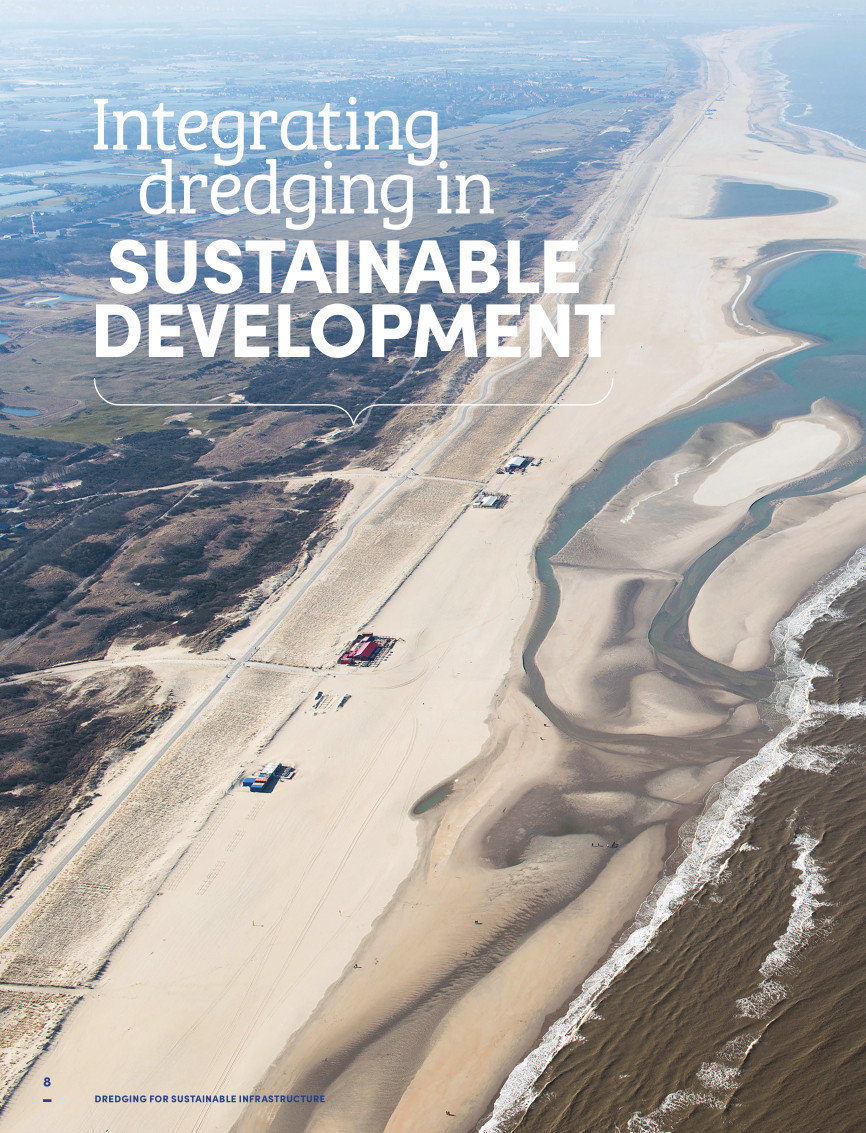
INTEGRATING DREDGING IN SUSTAINABLE DEVELOPMENT
Adapted from the second chapter of Dredging for Sustainable Infrastructure (2018), this article forms the foundation for this first issue and presents the concept of sustainability in relation to dredging projects. It describes the approaches and practices that are key to creating more sustainable solutions and infrastructure – a modern way of thinking about dredging.
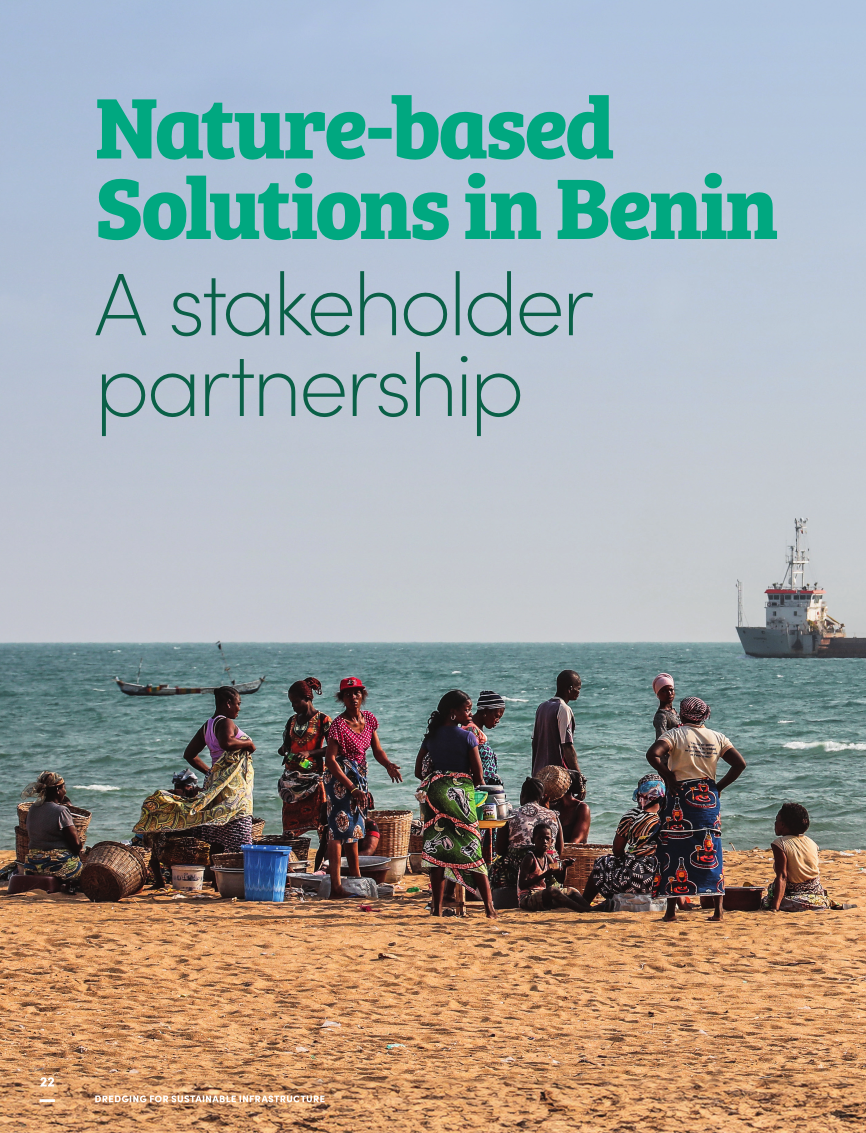
NATURE-BASED SOLUTIONS IN BENIN
In early 2018, the Government of the Republic of Benin awarded Jan De Nul a design and build contract to protect a 5-kilometre-long stretch of coastline near the town of Avlékété. The project fits into the government’s plan to turn the local coastal zone, which includes a lagoon, sandspit and beaches, into tourist hotspots. Yet the persistent oceanic swell and chronic erosion required an intervention. This is the perfect starting point for a nature- based structure that offers multiple ecosystem services. Its long-term effectiveness, however, hinges on the support of its end users. Stakeholder engagement was therefore central to the project.
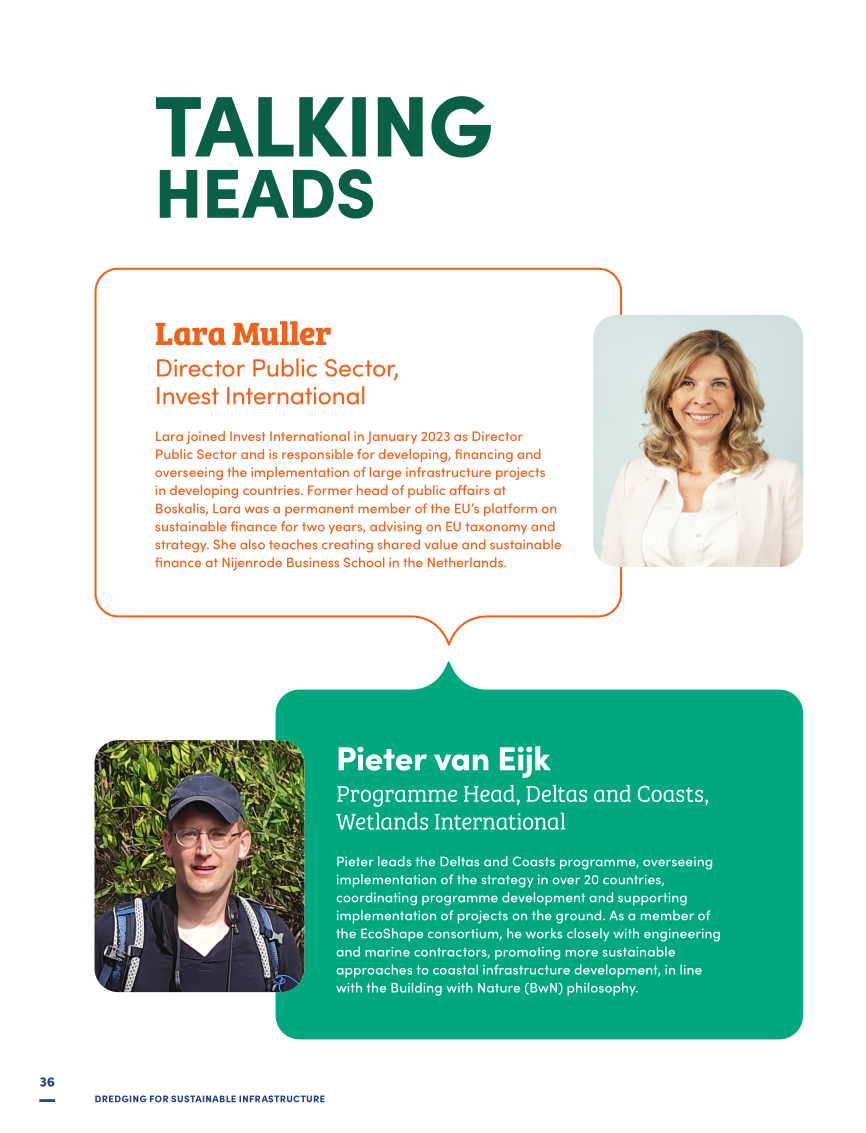
TALKING HEADS
Lara Muller (Invest International) and Pieter van Eijk (Wetlands International), discuss the role investors and NGOs can play in driving demand for nature-based solutions.
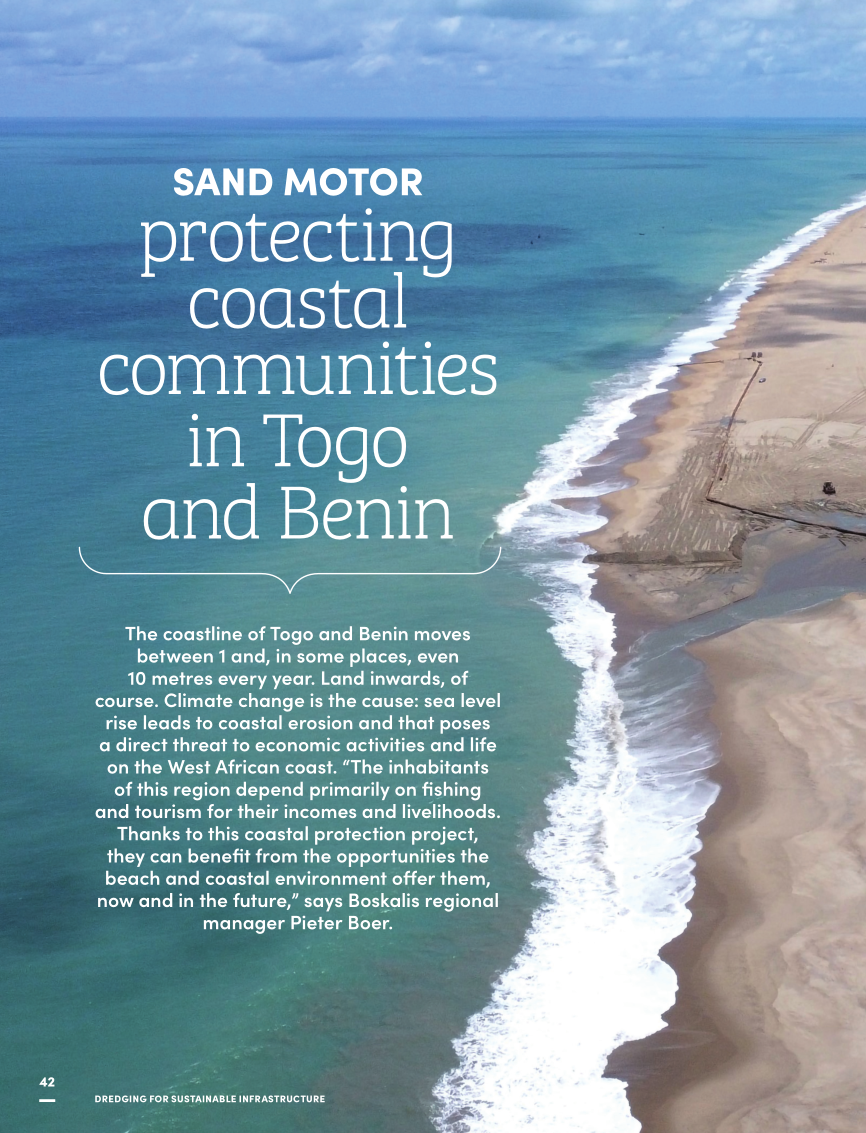
SAND MOTOR PROTECTING COASTAL COMMUNITIES IN TOGO AND BENIN
The coastline of Togo and Benin moves between 1 and, in some places, even 10 metres every year. Land inwards, of course. Climate change is the cause: sea level rise leads to coastal erosion and that poses a direct threat to economic activities and life on the West African coast. “The inhabitants of this region depend primarily on fishing and tourism for their incomes and livelihoods. Thanks to this coastal protection project, they can benefit from the opportunities the beach and coastal environment offer them, now and in the future,” says Boskalis regional manager Pieter Boer.
Registration open! 18 October, Ho Chi Minh City, Vietnam
Registration open! IADC and PIANC organise a one-day conference in Ho Chi Minh City, Vietnam on 18 October.
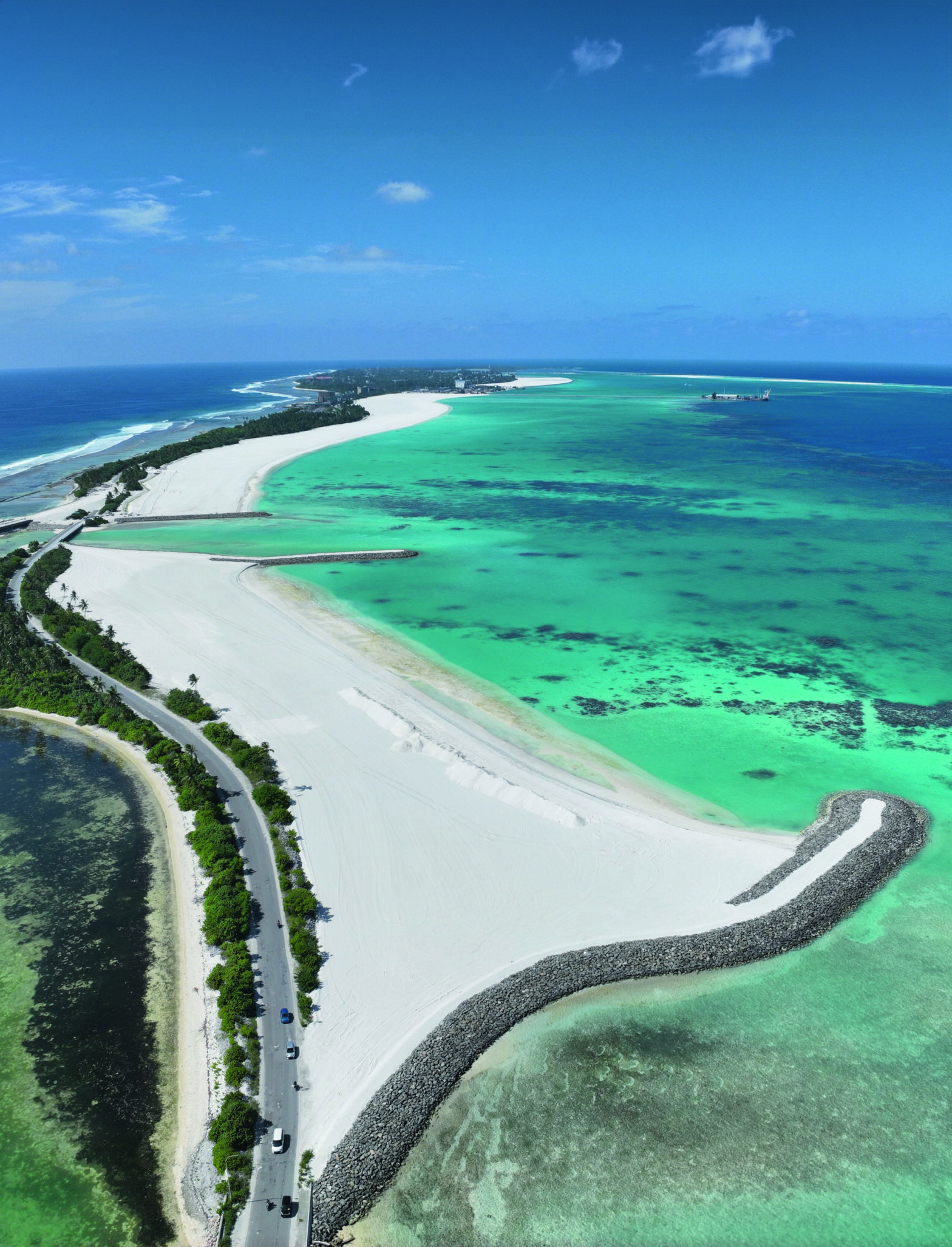
Environmental management and mitigation measures: Addu City project
Dredging and reclamation projects can significantly impact local ecosystems. Negative impacts can be minimised by adopting proper environmental management and mitigation, from preparation to completion phase. Addu City project sets an example of implementing novel construction methodologies and successfully addressing environmental challenges. The project has created over 200 hectares (ha) of climate resilient land for housing and touristic development. Enclosure of footprints, relocation of corals and seagrass (at pilot level) before reclamation process, and monitoring sediment impact in the nearby marine protected areas during dredging and reclamation are exemplary of the management approach applied to ensure minimisation of potential negative environmental impacts.
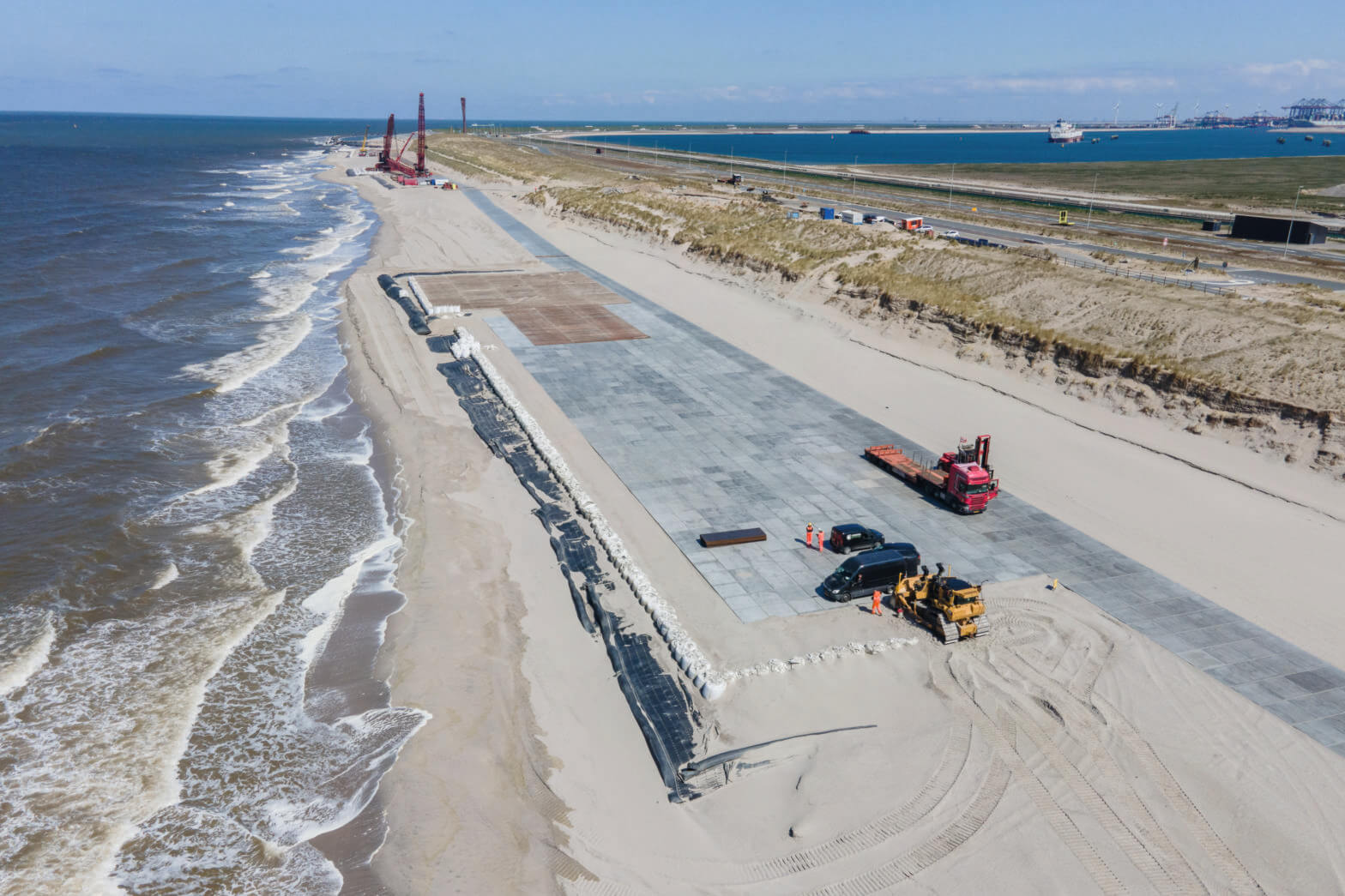
2D effects on dune erosion at maasvlakte 2
Dune erosion due to storm surges and severe wave attack is the primary failure mechanism of sandy sea defences. At a curved coastline, dune erosion is greater than at a straight coastline. However, how much higher is often difficult to predict. This article presents a comparison of field observations and model results of the response of the Maasvlakte 2 curved sandy sea defence to storm attack.

Modernisation of the Świnoujście – Szczecin fairway
The idea of a modern maritime access route from the Baltic Sea to the Port of Szczecin in Poland was already born towards the end of 20th century. Quay walls in the neighbouring Port of Police, built in the 80s, were already constructed to accommodate a depth of 12.5 metres and initial modernisation works commenced in the early 90s. On 28 September 2018 the “Modernisation of the Świnoujście – Szczecin Fairway to a depth of 12.5 m” became a reality with the signing of the design and build contract between the Maritime Office Szczecin and the DIVO consortium (Dredging International NV and Van Oord).