

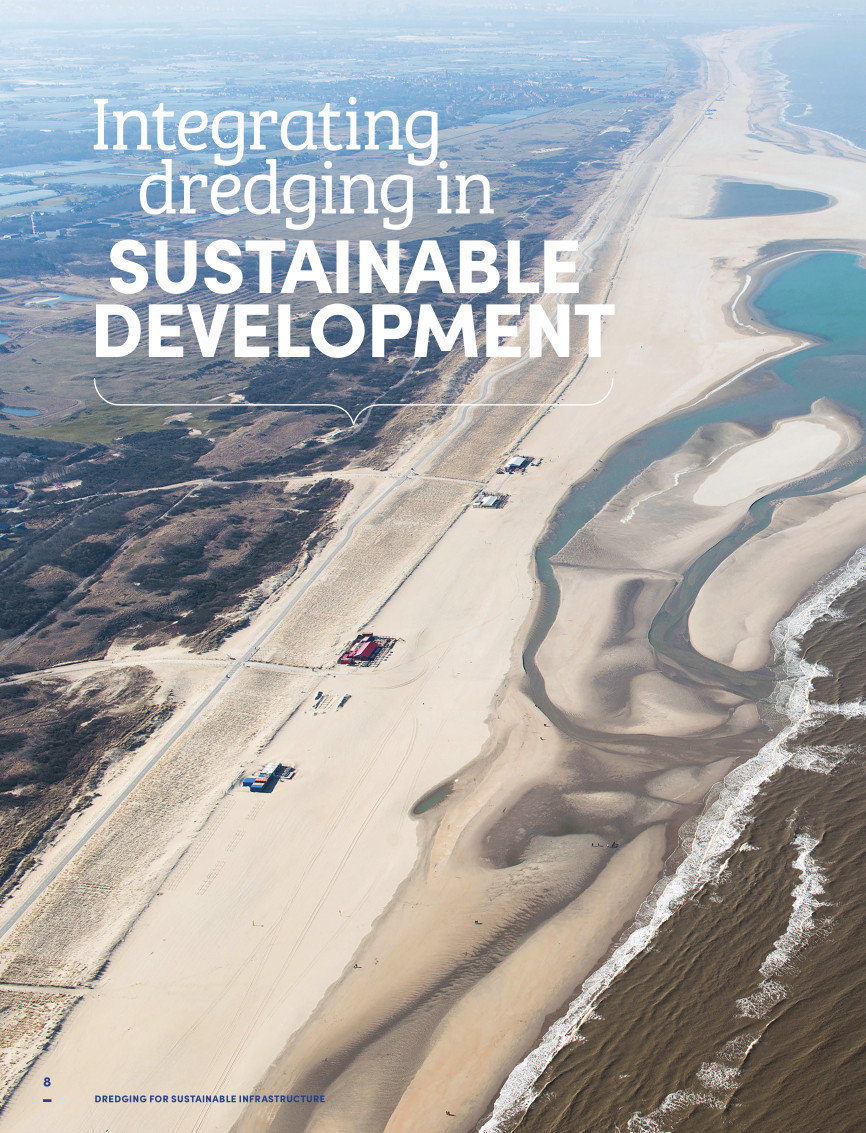
INTEGRATING DREDGING IN SUSTAINABLE DEVELOPMENT
Adapted from the second chapter of Dredging for Sustainable Infrastructure (2018), this article forms the foundation for this first issue and presents the concept of sustainability in relation to dredging projects. It describes the approaches and practices that are key to creating more sustainable solutions and infrastructure – a modern way of thinking about dredging.
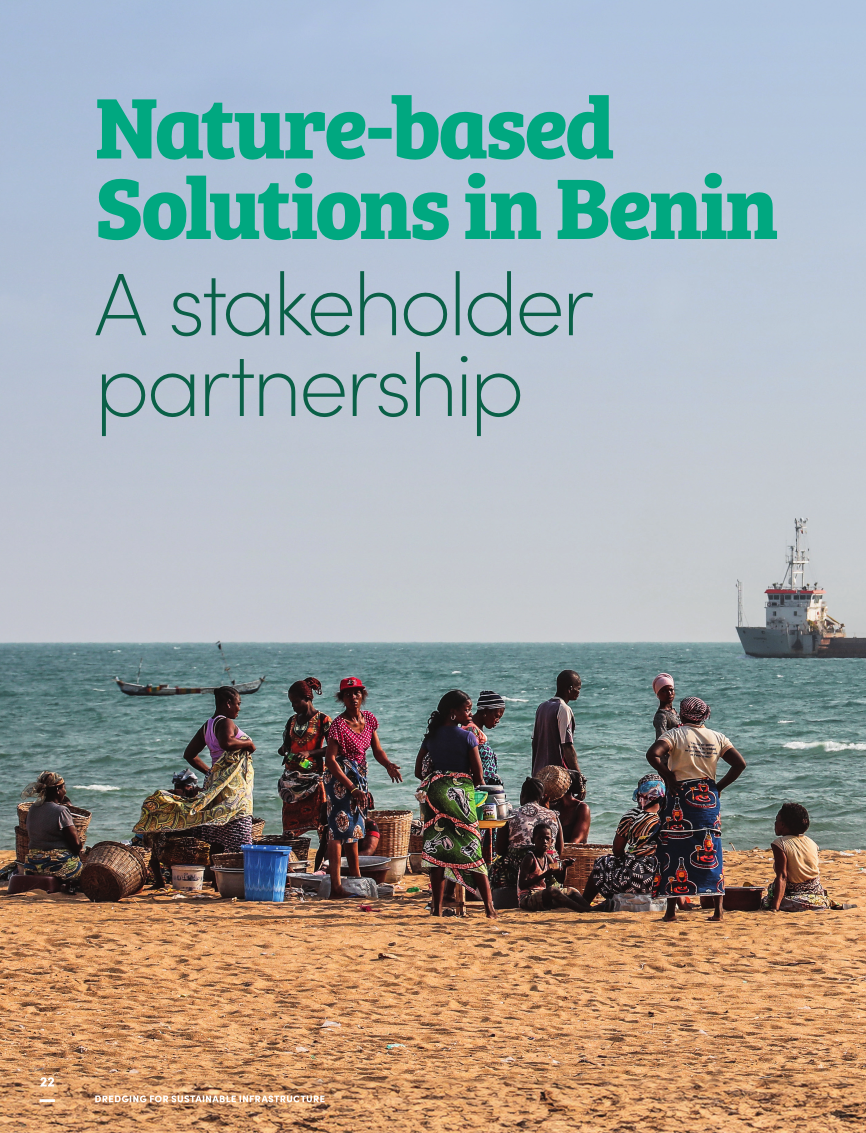
NATURE-BASED SOLUTIONS IN BENIN
In early 2018, the Government of the Republic of Benin awarded Jan De Nul a design and build contract to protect a 5-kilometre-long stretch of coastline near the town of Avlékété. The project fits into the government’s plan to turn the local coastal zone, which includes a lagoon, sandspit and beaches, into tourist hotspots. Yet the persistent oceanic swell and chronic erosion required an intervention. This is the perfect starting point for a nature- based structure that offers multiple ecosystem services. Its long-term effectiveness, however, hinges on the support of its end users. Stakeholder engagement was therefore central to the project.
TALKING HEADS
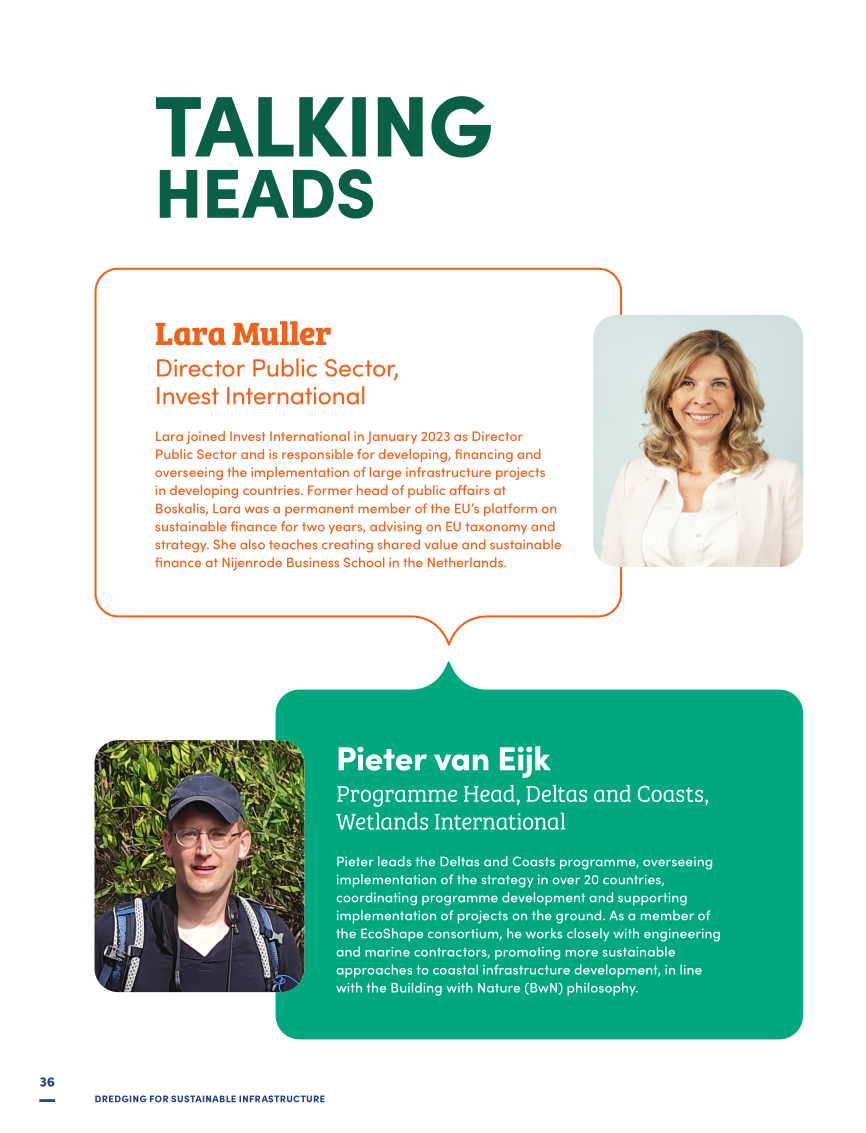
Lara Muller (Invest International) and Pieter van Eijk (Wetlands International), discuss the role investors and NGOs can play in driving demand for nature-based solutions.
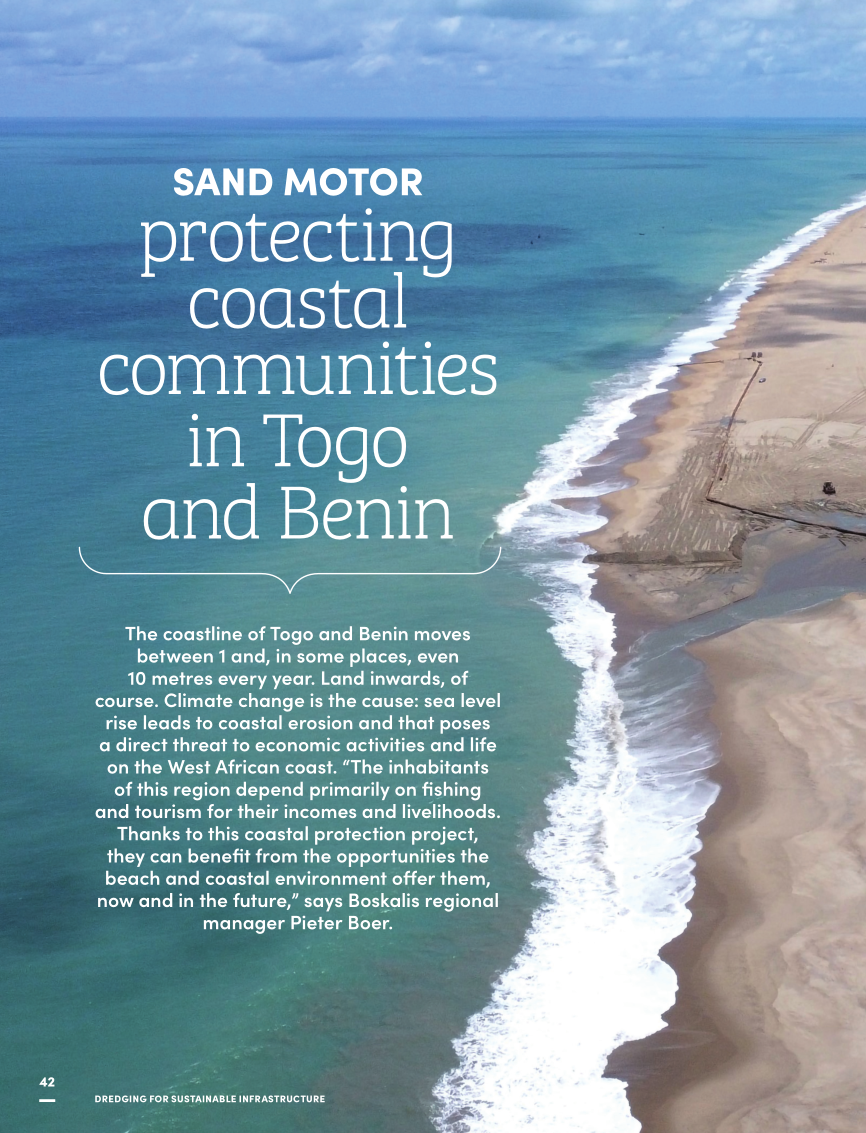
SAND MOTOR PROTECTING COASTAL COMMUNITIES IN TOGO AND BENIN
The coastline of Togo and Benin moves between 1 and, in some places, even 10 metres every year. Land inwards, of course. Climate change is the cause: sea level rise leads to coastal erosion and that poses a direct threat to economic activities and life on the West African coast. “The inhabitants of this region depend primarily on fishing and tourism for their incomes and livelihoods. Thanks to this coastal protection project, they can benefit from the opportunities the beach and coastal environment offer them, now and in the future,” says Boskalis regional manager Pieter Boer.

Former Zephyr Refinery: fire suppression ditch area project
Situated in Muskegon, Michigan, the project provided numerous environmental benefits related to the remediation of legacy sediment contamination as well as restoration of the habitat into a more diverse wetland system.

Fehmarnbelt: A green link between Germany and Denmark
To connect Scandinavia with Germany, the world’s longest immersed tunnel will be built. The Fehmarnbelt will close a major gap in the European transport network while fostering the development of new nature and recreational landscapes.