

TURBIDITY FORECASTING TO SUPPORT ADAPTIVE DREDGING OPERATIONS
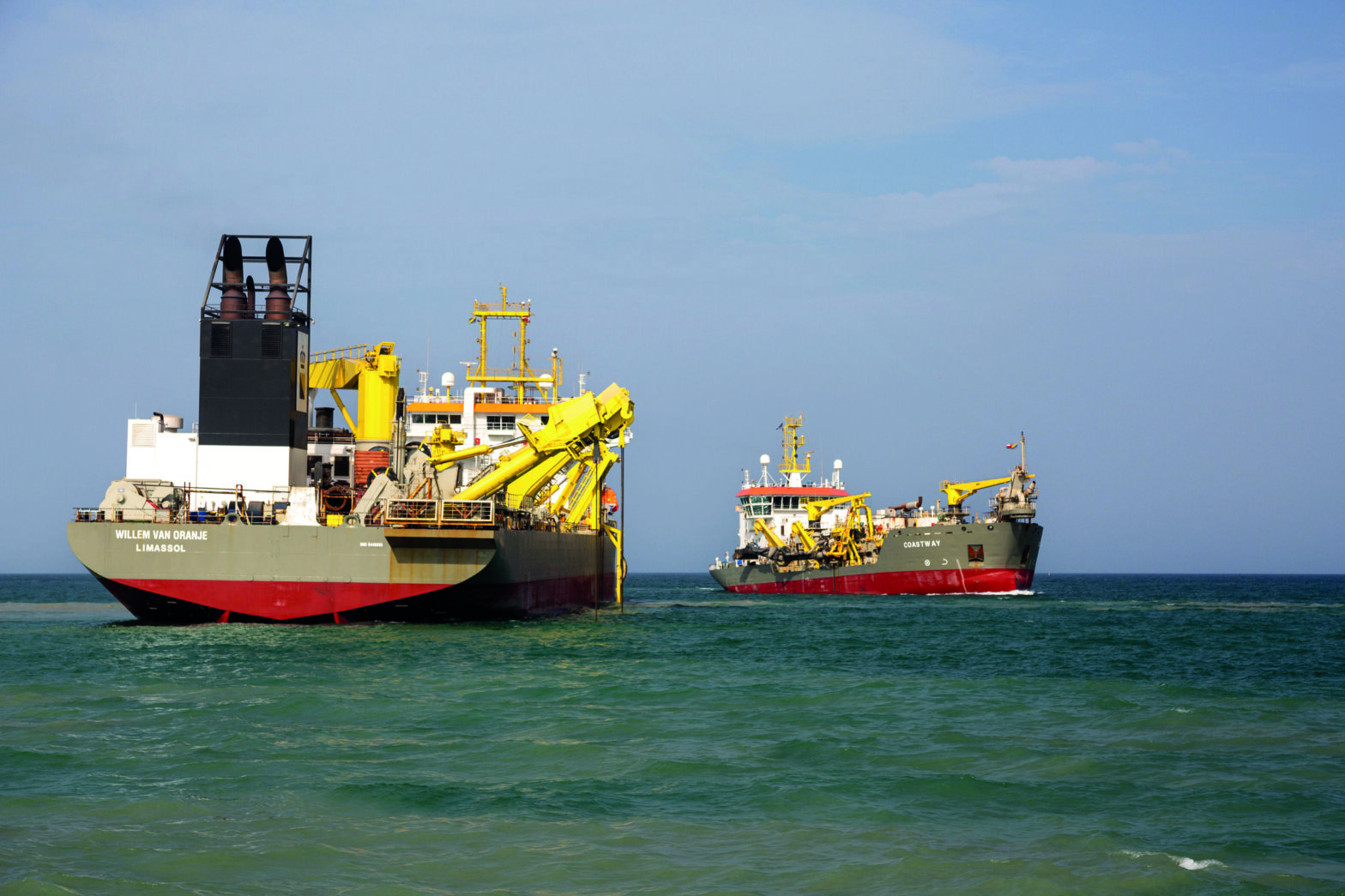
The Port of Sohar, located in the Gulf of Oman, is constructing a jetty close to a critical industrial seawater intake. The project includes capital dredging of a navigation channel, turning circle and berth pocket, where turbidity control is essential to protect water supply operations. A pre-tender assessment identified potential exceedance of turbidity limits under unfavourable conditions, leading to strict permit requirements. To address this, a turbidity forecasting model was developed to support daily operational decisions. Using wind, tides, dredging plans and soil properties, the model enabled proactive, adaptive dredging while maintaining compliance and optimising productivity.

GULHIFALHU RECLAMATION PROJECT
Environmental and social management in marine infrastructure projects is fast evolving. In Gulhifalhu’s pristine waters, Boskalis delivered one of the Maldives’ most complex dredging and reclamation projects amid sensitive habitats and high stakeholder expectations. Guided by international best practice and close collaboration with partners, robust controls safeguarded marine habitats while enabling development. The result stands as a blueprint for future projects, demonstrating that sustainable marine infrastructure can deliver lasting benefits for nature, communities and economic progress.
LIFE MARINAPLAN PLUS Project: Sustainable marine and coastal seabed management
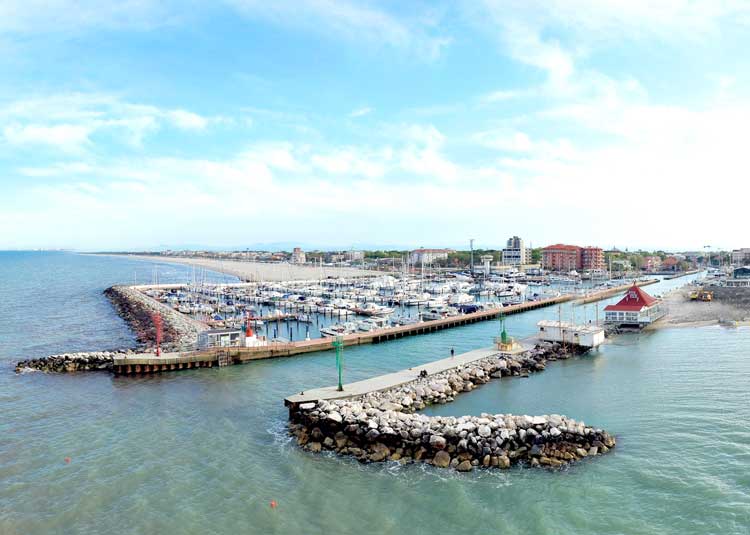
In June 2019, the research team of the LIFE MARINAPLAN PLUS project began operating the first-of-a-kind demonstration plant installation at the harbour entrance of Marina di Cervia (Italy). Fulfilling the project’s objective to apply at industrial scale a reliable technology for the sustainable management of sediment in marine infrastructures, this technology prevents harbour silting through the use of submerged devices called ‘ejectors’ installed on the seabed.

Bio-Engineering Sediment Management And Removal of Turbidity Technologies: BESMART Technologies
At Deltares in the Netherlands, a research team is developing a portfolio of technologies dedicated to the management of the finest and most challenging fraction of soft sediments. These technologies may unambiguously be called nature based because they make use of natural processes to enhance dewatering and strengthening, induce flocculation and the settling of fines, and protect the muddy bed from erosion.

Can surface turbidity plume generation near a Trailing Suction Hopper Dredger be predicted?
A surface plume from overflow can stay suspended for long periods and distances, resulting in negative environmental impact through increased turbidity and sedimentation. Generation of a surface turbidity plume from the overflow of a Trailing Suction Hopper Dredger is investigated by a process-based, detailed Computational Fluid Dynamics model.

Assessing and evaluating environmental turbidity limits for dredging
Dredging is essential for the maintenance and development of ports, harbours and waterways to allow for safe navigation, remediation and flood management. The process, which relocates large volumes of sediment, can be accompanied by the release of suspended sediments into the water column referred to as sediment plumes.

Mapping water quality with drones: test case in Texel
Winning co-author Liesbeth De Keukelaere the Young Author Award, an article about the pilot test case organised at the Prins Hendrik Zanddijk project in Texel, The Netherlands, demonstrating drone technology for water quality monitoring.

Challenges of optical backscatter monitoring in mixed sediment environments
Popular instruments in the field, optical backscatter instruments (OBS) are used to measure suspended sediments. The sensitivity of OBS measurements in relation to grain size and the applicability of OBS measurements in mixed sediment environments is analysed.